All Categories
Featured

Navigating 2026 Medicare Benefit Options and Seniors
Table of Contents
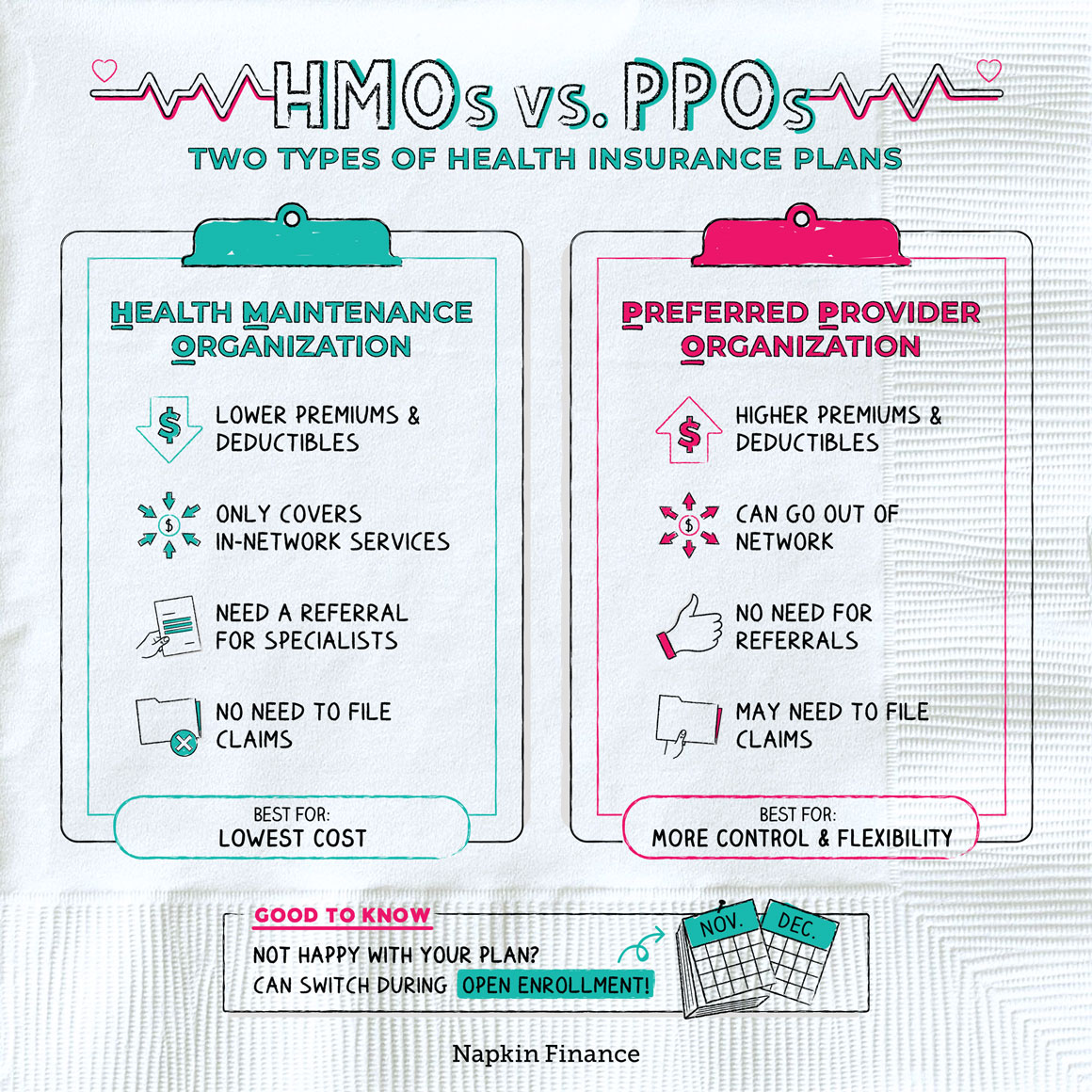
An HMO insurance plan is often considered being more cost-efficient due to its lower monthly premiums and convenient due to its requirement that clients should have a main care physician to handle their care. A PPO insurance plan is known for its flexibility as it permits clients to manage their own care and look for different providers/specialists without needing a referral.
Similar to basic insurance plans, the two primary Medicare Advantage plans are HMO and PPO.While HMO and PPO insurance plans continue to be the most common option for patients to pick from, there are a range of other insurance coverage alternatives. HMO and PPO insurance coverage strategies are the 2 most typical health care insurance coverage plans in the United States.
While these insurance coverage plans are various, they are comparable in the sense that they provide a client with a network of physicians, healthcare facilities, and other doctor that aid members with their health-care journey. "HMO" acts as an acronym for "Health Upkeep Organization," while "PPO" works as an acronym for "Preferred Supplier Organization." An HMO insurance coverage strategy is centered around a variety of medical facilities and health care suppliers (referred to as an "HMO network") that have actually consented to deal with clients within the network's insurance coverage strategy. A referral is necessary for a client to see other professionals that are in-network or out-of-network, and typically, receiving out-of-network care just happens in emergency situation situations. This plan provides lower regular monthly premiums for its consumers, making it an affordable insurance coverage alternative.

Typically, lower expenses for prescriptions. A client can just see suppliers within the strategy's network unless they have a referral for an outside expert, or it's an emergency circumstance. Like an HMO strategy, a PPO insurance plan offers a patient with a network (referred to as a "PPO network") of health care service providers and healthcare facilities.
How Term Insurance Builds Family Security
This plan also lets the client coordinate their care and manage which providers they would like to see, versus having a medical care doctor. The patient has more flexibility with which providers they pick to see, whether they're within the strategy's network or out-of-network. The majority of times, there is no requirement for a referral if a client cares to see an out-of-network specialist.
The client is accountable for managing their health care, vice a medical care physician supervising. A 'company network' describes the list of doctors, professionals, medical facilities, and so on that an insurance coverage firm contracts to supply medical services to its plan members. Service providers that are 'in-network' refer to the healthcare workers and health centers that are noted in the plan.
The costs associated with an HMO plan consist of deductibles, which is the amount a client should pay before insurance contributions, and regular monthly premiums, which is the quantity secured of a client's paycheck. Generally, the month-to-month premiums taken out with an HMO plan are lower than a PPO strategy's premiums.
Insurance in Los Angeles CA
Yearly, this caused a $6,869 coverage on individuals and $19,445 protection on households, revealing a lower month-to-month premium in contrast to a PPO strategy type. Deductibles, month-to-month premiums, and copays are costs commonly associated with a PPO strategy. Most times, the month-to-month premiums are gotten with a PPO plan that is more costly than an HMO plan's premiums.
Securing Coverage to Support Families
According to the Kaiser Household Structure 2018 Health Advantages Survey, all firms using a PPO insurance strategy paid $592 as the monthly premium on a specific and $1,694 as the monthly premium on a household. Yearly, this led to a $7,149 coverage on individuals and $20,324 coverage on families, revealing a higher monthly premium in contrast to an HMO strategy type.
When trying to choose which plan is best, there are lots of factors to think about, with a few of the most important being flexibility, cost efficiency, and coordination of care. If it's versatility that is most crucial, then a PPO insurance plan may be a better fit for they enable a patient to have more control over which providers they see and when, no matter a referral.
Another benefit to an HMO strategy is that it requires a patient to have a primary care physician that collaborates their look after them. This means that with a PPO insurance coverage strategy, the patient will need to manage their own care and supervise which providers/specialists they require to go to. In the end, one strategy is ruled out better than the other.
Health insurance coverage strategies do not cover dental insurance. For additional information on acquiring an oral strategy, such as an oral HMO strategy, 'DHMO strategy,' or a dental PPO plan, 'DPPO strategy,' go to this resource. Once an American (who has actually been paying Medicare taxes for a minimum of 10 years) turns 65, they qualify for the medical insurance strategy referred to as Medicare.

Latest Posts
Essential Health Insurance Tips

Selecting Medicare Advantage Coverage

Getting Individual Health Insurance Quotes Online